Demand fit
Infrastructure shaped around how it will be used.

04 / Mobility meets the grid
Building the connection between transportation, buildings and the power system.
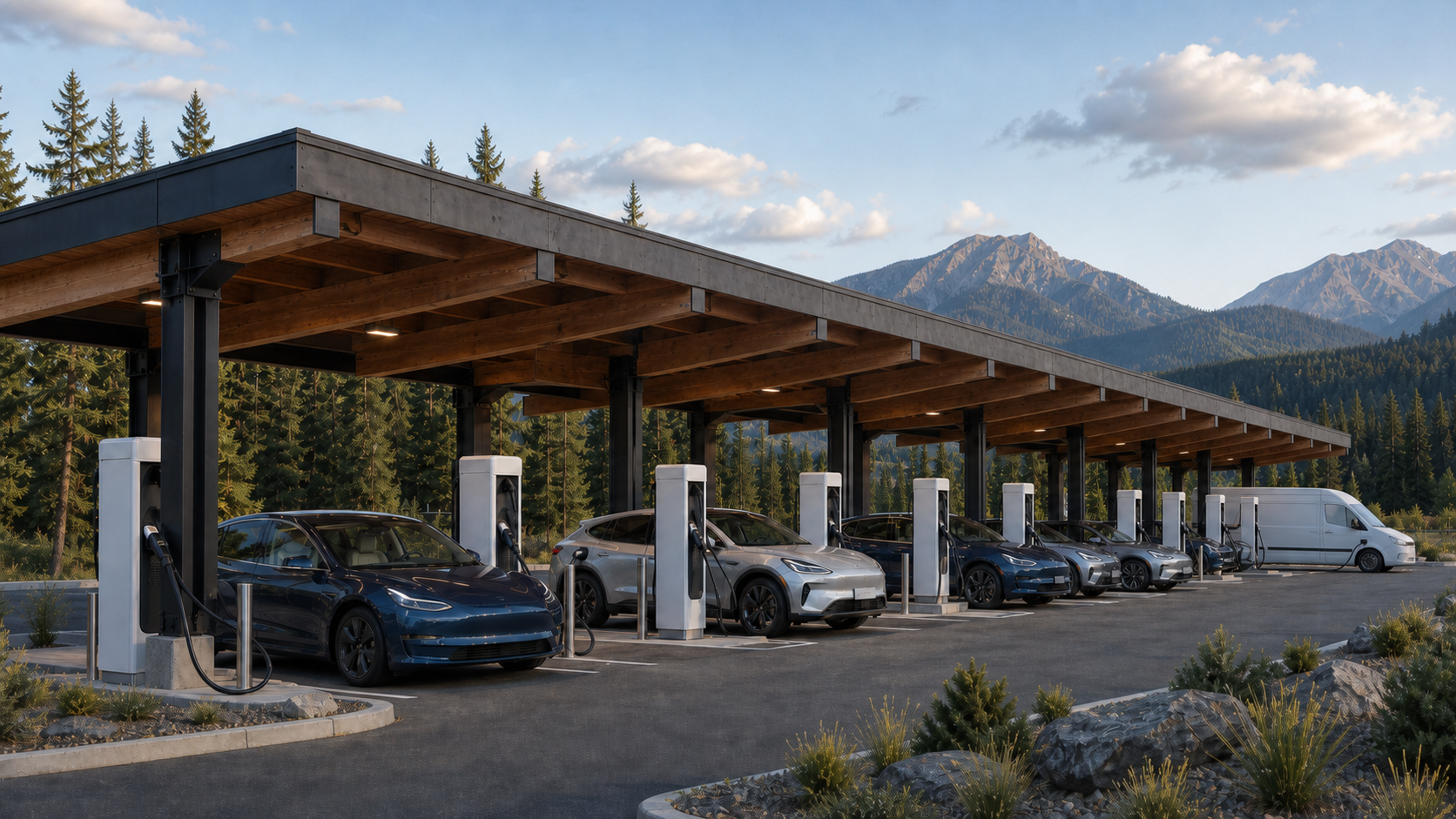
Charging infrastructure is evolving from a one-way service into a managed energy platform.
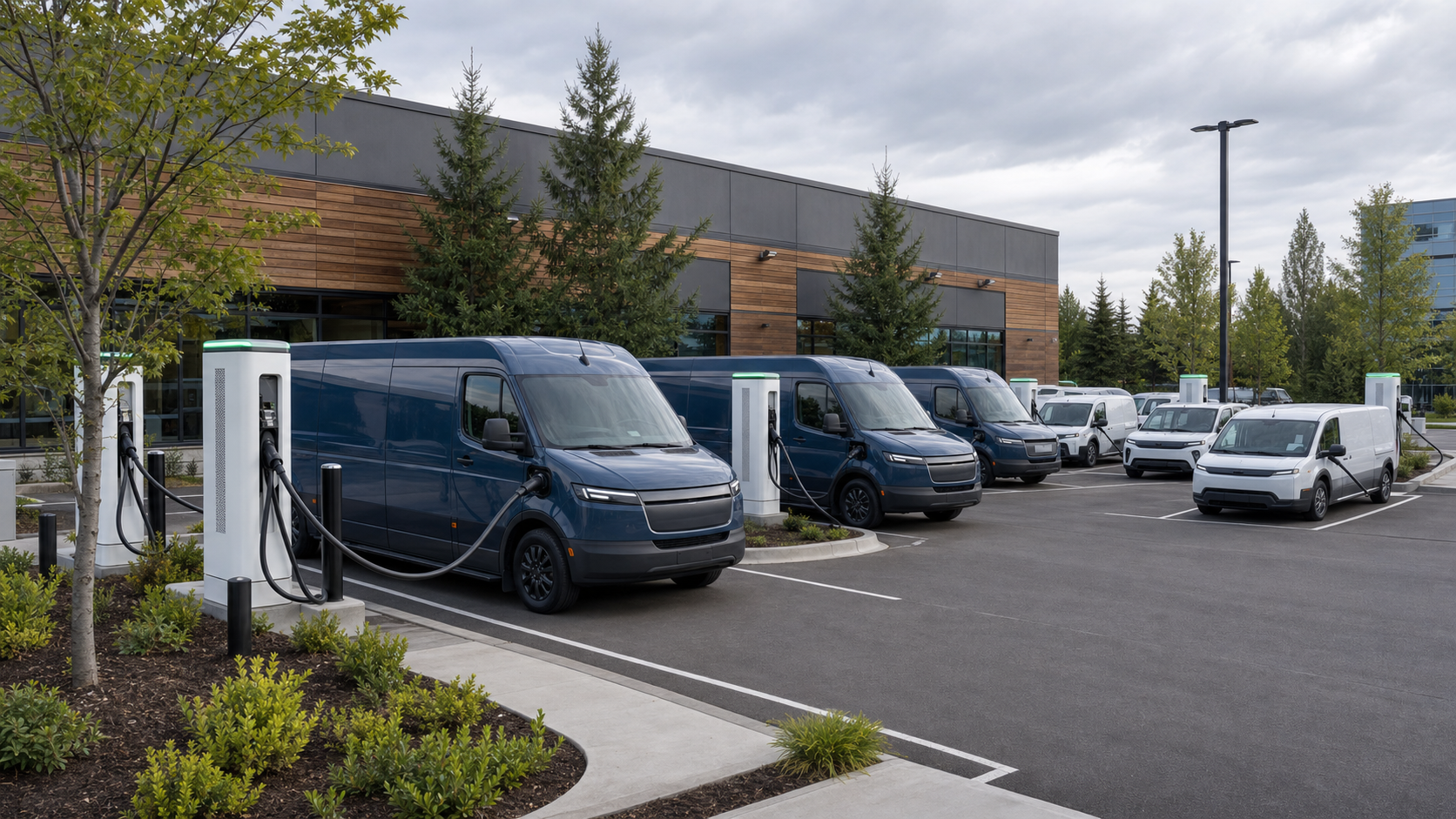
Vehicles, dwell time and available capacity shape the site.
The opportunity
As vehicle adoption grows, charging becomes a meaningful load that must be designed around sites, fleets, utility capacity and driver behaviour. Managed charging can reduce peaks and make better use of existing infrastructure.
With compatible vehicles and market frameworks, bidirectional charging can allow parked batteries to support buildings or the wider grid. BCON views this convergence as an emerging layer of distributed energy infrastructure.
Grid-interactive charging
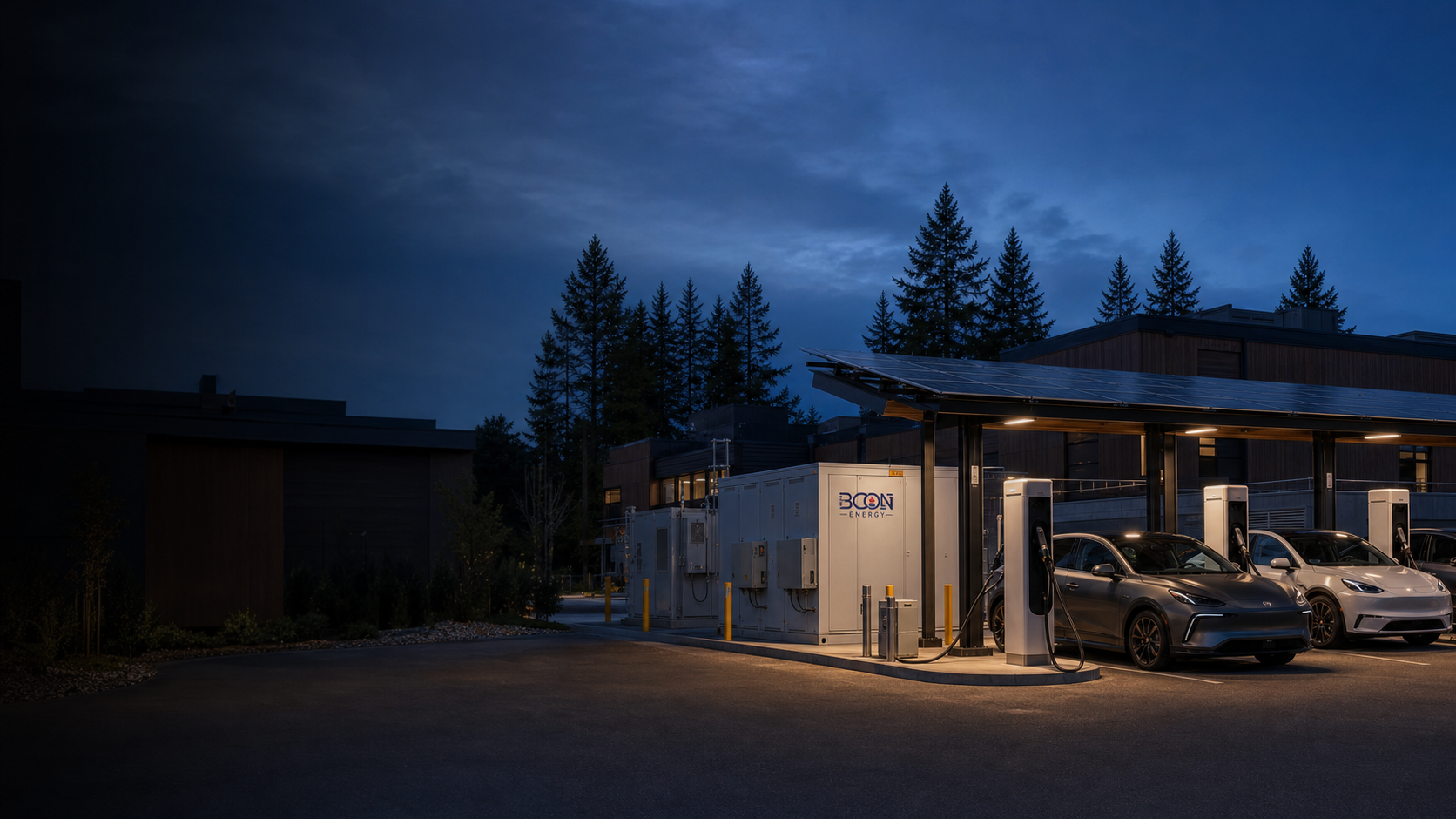
A charging site can connect vehicles, buildings, on-site energy and the grid as one system.
Infrastructure shaped around how it will be used.
Capacity and control considered as one system.
A platform ready to evolve with vehicles and markets.
Indigenous Acknowledgement
BCON Energy is based in Richmond, British Columbia, on the traditional, ancestral and unceded territory of the xʷməθkʷəy̓əm (Musqueam) people. We recognize their enduring relationship with these lands and waters, and commit to respectful relationships with Indigenous communities wherever we work.